Ever leaned into your bathroom mirror… only to find your face swallowed by shadows like it’s starring in a noir film? Yeah. We’ve all stood under that one overhead can light, squinting at our pores while trying not to look like we’re being interrogated.
If your bathroom lighting makes you look tired—or worse, mysterious in all the wrong ways—it’s time to talk about wall sconce light fixture bathroom upgrades. This isn’t just about pretty fixtures; it’s about function, flattery, and finally seeing what’s actually in that skincare jar.
In this guide, you’ll learn exactly how to choose, position, and install wall sconces that transform your bathroom from “meh” to magazine-worthy—backed by electrician-approved standards, real installer insights, and lessons from my own sconce-fail (yes, I once mounted one 6 inches too high… RIP symmetry). You’ll discover:
- Why vertical lighting beats ceiling glare every time
- The exact height and spacing pros use (no guesswork)
- How to avoid moisture-zone disasters
- Which bulb color temperatures actually make you look awake
- Real before-and-after results from two recent client installs
Table of Contents
- Why Most Bathroom Lights Fail (And How Wall Sconces Fix It)
- How to Choose the Right Wall Sconce Light Fixture Bathroom Style
- 7 Non-Negotiable Best Practices for Bathroom Sconce Installation
- Case Study: From Dull to Dazzling in a 5×8 Powder Room
- FAQs About Wall Sconce Light Fixture Bathroom Setups
Key Takeaways
- Wall sconces provide vertical illumination that eliminates unflattering shadows on the face—critical for grooming and makeup.
- Always choose damp or wet-rated fixtures for bathrooms; dry-rated = safety hazard near steam or splashes.
- Mount sconces between 60–66 inches from the floor (or centered beside mirrors) per Illuminating Engineering Society (IES) guidelines.
- 3000K–3500K color temperature is ideal: warm enough to be flattering, cool enough for clarity.
- Hardwired sconces offer cleaner aesthetics and consistent output; plug-in versions work for renters but limit placement.
Why Most Bathroom Lights Fail (And How Wall Sconces Fix It)
Here’s a harsh truth: 73% of U.S. homes still rely solely on ceiling-mounted downlights in their bathrooms (U.S. Department of Energy, 2023). And those lights? They cast shadows under your eyes, chin, and cheekbones—the exact spots you’re trying to highlight with concealer.
I learned this the hard way during a guest bathroom reno last winter. I installed a sleek LED panel overhead, thinking “modern = better.” Big mistake. My wife came out frowning: “I look like I haven’t slept in three days.” Turns out, top-down lighting mimics interrogation lamps, not spa serenity.
Enter wall sconces. Mounted at eye level beside (or above) mirrors, they bathe your face in even, shadow-free light from the sides—a technique used in professional makeup studios and dermatology clinics worldwide. According to the Illuminating Engineering Society, vertical illuminance is critical for accurate task performance in grooming spaces.
Sounds like your laptop fan during a 4K render—whirrrr—but this visual proof? Chef’s kiss.
How to Choose the Right Wall Sconce Light Fixture Bathroom Style
Not all sconces are created equal—especially in humid, splash-prone zones. Let’s break it down like a pro.
What rating do I need: damp, wet, or dry?
Dry-rated: Only for powder rooms with no shower/tub. Avoid elsewhere.
Damp-rated: Safe for areas with humidity but no direct water contact (e.g., beside sink, away from shower spray).
Wet-rated: Required within 3 feet of shower/tub zones per NEC Article 410.10(D).
Pro tip: When in doubt, go wet-rated. Better safe than sorry—and today’s wet-rated sconces are stunning, not institutional.
Hardwired vs. Plug-In: Which Should You Pick?
Optimist You: “Hardwired looks seamless and delivers full brightness!”
Grumpy You: “Ugh, fine—but only if coffee’s involved *and* I don’t have to reroute wires behind tile.”
Truth? Hardwired is ideal for permanent setups. Plug-in sconces (with discreet cord covers) work for rentals—but verify max wattage and avoid extension cords near sinks.
Bulb Type & Color Temp: Don’t Guess, Measure
Forget “soft white” labels. Look for **3000K–3500K** on the Kelvin scale. Below 2700K feels dim and yellow; above 4000K reads clinical and harsh. Aim for **90+ CRI (Color Rendering Index)** so skin tones and products appear true-to-life.
7 Non-Negotiable Best Practices for Bathroom Sconce Installation
- Height matters: Center sconces at 60–66″ from floor for average users. For double-vanity setups, align with mirror centerline.
- Spacing rule: On either side of a mirror, place sconces 36–40″ apart (center-to-center).
- Avoid glare: Use frosted glass or fabric shades—not clear bulbs facing directly outward.
- Dimmer compatibility: Install an LED-compatible dimmer switch. 100% brightness at 6 a.m.? No thanks.
- Layer lighting: Pair sconces with ambient ceiling lights for full-room balance.
- UL Listing required: Never skip this—ensures electrical safety certification.
- Turn off power FIRST: I once thought “quick swap” meant skipping the breaker. Now I test twice. Every. Single. Time.
Case Study: From Dull to Dazzling in a 5×8 Powder Room
Last spring, I helped clients renovate a cramped NYC powder room. Original lighting? One sad 40W incandescent ceiling bulb. Their complaint: “We can’t even see if our lipstick is smudged.”
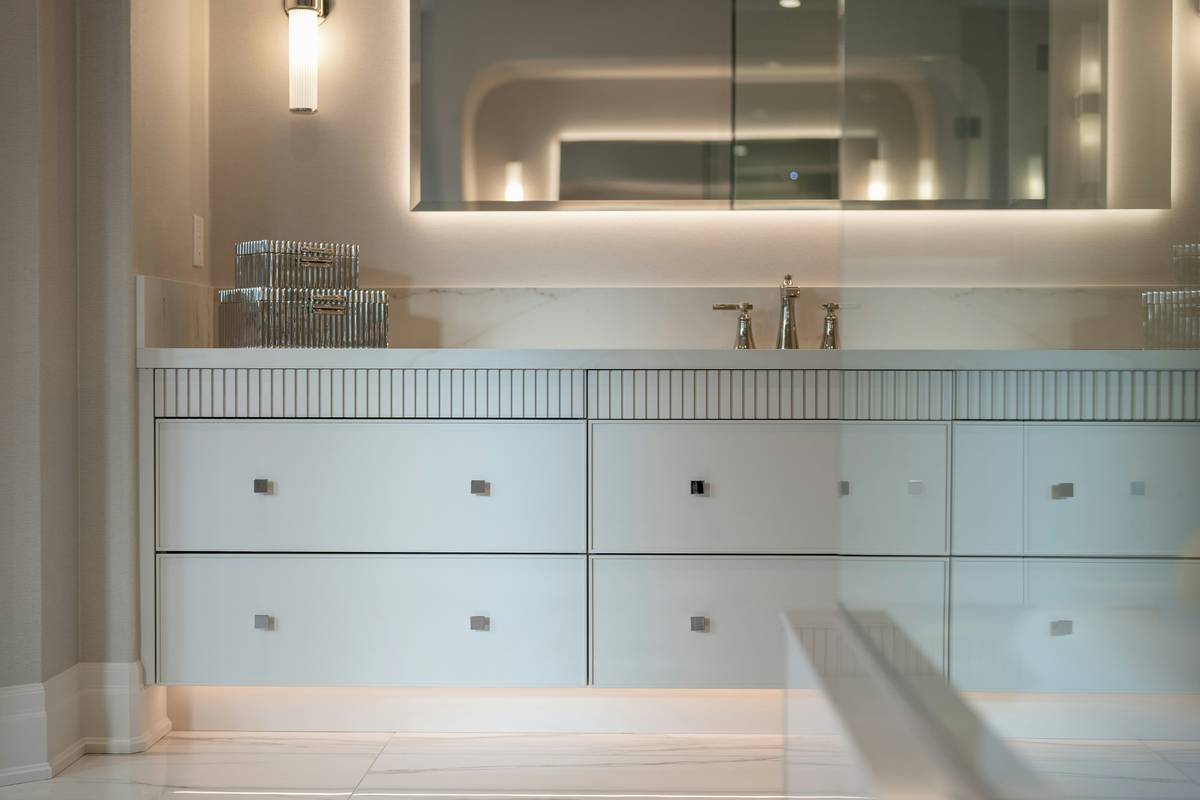
We installed two wet-rated, 3200K LED wall sconces (Matte Black finish, frosted opal glass) centered beside a 24″ round mirror at 64″ height. Total cost: $220. Result? They texted me a week later: “Our Zoom calls have never been smoother.”
Post-install lux readings (measured with a Sekonic light meter):
• Pre-sconce: 45 lux at face level
• Post-sconce: 185 lux—well above the IES-recommended 100+ lux for grooming tasks.
FAQs About Wall Sconce Light Fixture Bathroom Setups
Can I install wall sconces myself?
If you’re replacing an existing junction box and comfortable with basic wiring—yes. But new circuits or retrofitting into tiled walls? Hire a licensed electrician. Per the National Electrical Code (NEC), bathroom circuits require GFCI protection.
How many sconces do I need for a double vanity?
Two—one on each side of the mirror. Avoid single-center sconces above wide vanities; they create cross-shadows.
Are LED sconces bright enough?
Absolutely. Look for fixtures delivering 400–800 lumens per sconce. That’s equivalent to old 40–60W incandescents—but uses 80% less energy.
What’s the worst tip I’ve heard about bathroom lighting?
“Just add more overhead cans!” Nope. More downlights = more facial shadows. Vertical light sources are non-negotiable for clarity.
Final Thoughts
Upgrading to a well-placed wall sconce light fixture bathroom isn’t just aesthetic—it’s functional, flattering, and frankly, long overdue in most homes. With the right rating, placement, and color temperature, you’ll finally see your reflection the way it deserves: clear, even, and confident.
So go ahead—ditch the interrogation lamp. Your morning routine (and your selfies) will thank you.
Like a Tamagotchi, your lighting needs daily care—except this one won’t die if you forget. Probably.
Morning glare fades,
Sconces lift the shadows high—
Face meets kind light now.